GIMPA researchers Vivian Osei, Disraeli Asante-Darko and Amoako Kwarteng surveyed 380 firms in Ghana to test how competitive strategy and circular economy practice implementation relate to corporate sustainability performance. Published in Business Strategy and the Environment, the study is featured in the first GIMPA Research Newsletter (September 2025).
GIMPA, with the Konrad Adenauer Stiftung, held the maiden Youth Experts Video Contest on Plastic Waste Challenges and Solutions, themed 'Reimaging Plastic: Youth Solutions for a Sustainable Future'. Nine young filmmakers from Greater Accra, Western and Ashanti regions made five-minute documentaries on plastic waste management; winning entries proposed turning plastic waste into fuel, paving blocks and bricks.
GIMPA and the Konrad Adenauer Stiftung held a day-long seminar on human rights in Ghana’s small-scale mining sector, attended by mining professionals, academics, human rights activists and officials from ministries and the Forestry Commission. The Rector, Prof. Samuel Kwaku Bonsu, gave the keynote 'Organising Precarity: Ghana’s Artisanal Small-Scale Mining Sector in Five Stanzas’.
Judith Sitsope Apetorgbor was sworn in as president of the Graduate Students’ Association of Ghana at GIMPA, the first woman to lead the graduate student body at the Institute. Her executive includes a Gender Commissioner, and she said the position was an occasion to amplify students’ voices and encourage women to take up leadership positions.
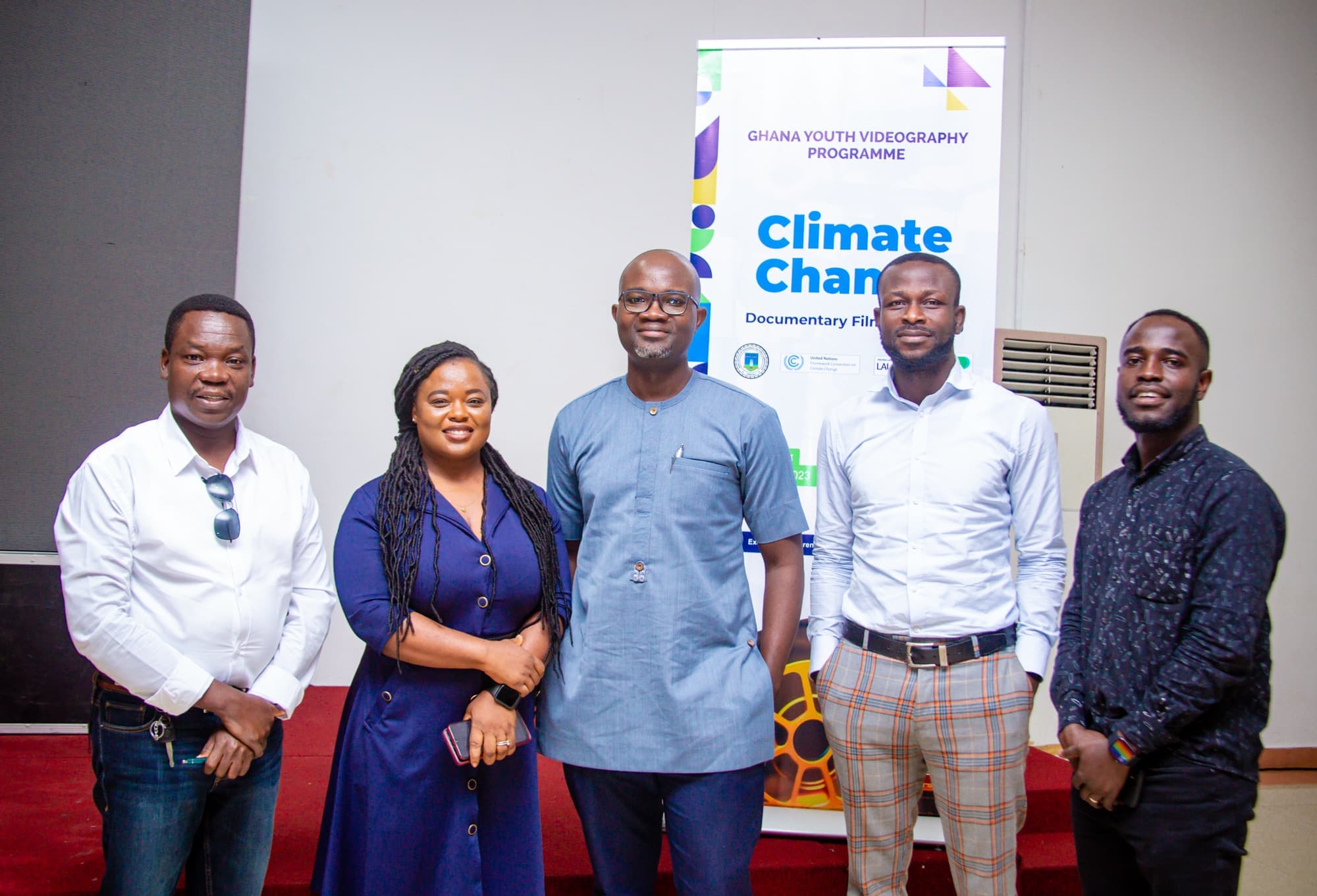
GIMPA hosted the Ghana Youth Video Programme, screening a climate change documentary made by young Ghanaian filmmakers, followed by a panel discussion with environmentalists and academics. Partners were the UN Framework Convention on Climate Change, Wilfrid Laurier University and the Youth Climate Report; the filmmakers’ stories were intended for presentation at COP28 in Dubai.
CEPUR’s first policy brief, published in September 2023, examines automatic tariff adjustment as a pricing mechanism for utility sectors and the challenges it creates for efficiency, input choices and political economy. It recommends periodic short-interval adjustments, an optimal renewable and non-renewable mix, and governance reforms to support sustainable utility performance.
In July 2022 the Rector, Professor Samuel Kwaku Bonsu, announced that GIMPA would from February 2023 offer scholarships to about 100 needy students to read specially designed undergraduate courses. The programme, described as a corporate social responsibility initiative, was to include work placement, travel abroad and community service.
At the maiden Development Impact Summit of Development Impact West Africa (DIWA), a research initiative hosted by GIMPA with the Center for Effective Global Action and funded by the Hewlett Foundation, GIMPA lecturer Dr Richard Boso presented an evaluation of MASLOC microloans. He reported that borrowers were more likely to remain in business during the COVID-19 period than non-borrowers.
GIMPA’s Research Newsletter (September 2025) features 'Challenges of rural women living with obstetric fistula: A phenomenological study' by Prof. Stephen T. Odonkor and Theodora N. Yeboah, published in Women and Birth. The study reports psychosocial, physical and economic challenges including divorce, incontinence and loss of livelihood, leaving women dependent on family members.
The GIMPA chapter of the National Association of Public Health Students, in collaboration with the Dr Annang Foundation, offered free health screening to residents of Nungua, Accra. Over 500 people were screened for malaria, hypertension, diabetes, hepatitis B and C and HIV, with breast cancer screening, laboratory, pharmacy and counselling services also provided.
Prof. Fanny Adams Quagrainie of GIMPA Business School co-authored 'Women Micro-entrepreneurship and Social Inclusion: The Moderating Role of Individual Perceptual Factors’ in the Journal of African Business (first published online in 2022, 2023 issue). The study examines how micro-entrepreneurship increases the likelihood of women’s social inclusion, with self-efficacy, fear of failure and resilience as moderating factors.